No one enjoys starting a Performance Improvement Plans. Managers dread the conversation, employees feel singled out, and HR teams brace for paperwork.
But when done right, a PIP isn’t punishment for an underperformer, but a second chance that can turn frustration into growth. The problem is, most companies handle it wrong: too vague, too late, or too buried in spreadsheets.
I took some time to explain how to create and manage a PIP that actually works: the one with clear steps, measurable goals, and a fair process backed by the right tools.
A Performance Improvement Plan (PIP) is a formal document that helps employees get back on track when their work isn’t meeting expectations. It is designed to identify employee performance deficiencies, create specific improvement goals, and provide support and guidance to help employees succeed.
It’s used when an employee consistently falls short on goals, misses deadlines, struggles with behavior or communication, or simply needs structured accountability to get back to expectations.
The main purpose is to help the employee improve through clarity and structure.
Managers use it to:
- Set clear expectations and timelines
- Offer training or resources for improvement
- Create regular progress meetings
- Track actions and results over a defined period (often a 30, 60, or 90 day plan)
A well-built PIP gives both the employer and employee a fair, transparent way to see if improvement is possible.
Simpler put, PIP is a structured action plan that gives someone a fair chance to improve before any serious decisions, like demotion or termination, are made.
Common misconceptions (PIP ≠ Punishment)
Many people hear “PIP” and immediately think “I’m getting fired.” That’s not what a proper plan is for. A good PIP isn’t a termination notice in disguise, but an opportunity to improve performance with structure and manager support.
The problem is that some companies misuse PIPs, turning them into a checkbox before firing someone. That’s a management failure, not a flaw in the process itself.
When done right, a PIP shows fairness and transparency. It tells the employee, “Here’s exactly what success looks like, and we’ll help you get there.”
If the employee meets the expectations, the result is often recognition, reinstated trust, and a stronger relationship with their manager.
That’s why modern human resource teams use performance review software to make PIPs more consistent and fair. They automate progress tracking, reminders, and documentation so no one’s effort gets lost in a spreadsheet.
When to use a PIP
You don’t start a Performance Improvement Plan (PIP) every time something goes wrong. It’s not for a single missed deadline or a one-off mistake. It’s for recurring issues, when the same problem keeps showing up even after coaching, feedback, and reminders.
I think of a PIP as a structured reset. It gives both the employee and the manager a clean slate, but with rules. It defines what needs to change, how progress will be measured, and what support the employee will get along the way.
The real purpose is to fix the issue while maintaining fairness and transparency. Everyone knows what’s expected, what success looks like, and what happens next.
1. Spot early warning signs
Most performance problems don’t appear overnight. They build slowly. You can usually catch them if you’re paying attention.
Look for early signs like:
- Projects or tasks consistently finishing late
- Quality slipping without a clear reason
- A change in attitude or motivation
- Communication breakdowns or missed updates
- Coworkers quietly covering for someone
When I notice patterns like these, I don’t wait for an annual review to bring them up. I start with a direct, honest conversation. If that doesn’t lead to steady improvement, I know it’s time for something more structured.
A PIP helps turn vague concerns into a clear plan. It protects the employee from misunderstandings and gives the manager proof that expectations and support were clearly communicated.
The key is timing. Start the process before frustration builds up—on either side.
2. Address repeated or visible problems
Some problems are too consistent or too disruptive to ignore. Maybe a sales rep keeps missing quotas despite extra training. Maybe a project manager’s tone keeps causing tension in meetings. Maybe quality errors keep piling up after multiple reminders.
At that point, regular coaching isn’t enough. You need a written plan that spells out what needs to change and by when.
A good PIP replaces vague conversations with concrete goals.
Example:
Instead of “You need to be more proactive,” say “You’ll provide weekly project updates every Monday before noon.”
That kind of clarity gives the employee a fair shot at success. It also gives the manager something objective to measure.
A PIP isn’t micromanaging, but accountability that both sides can track.
3. Fix misaligned expectations
Not every performance issue comes from a lack of effort. Sometimes, the employee and manager are just working from different definitions of success.
I’ve seen employees who think they’re doing well because they meet deadlines, but the manager expected strategic thinking, not just task completion. When expectations are unclear, even capable employees can fall short.
A PIP solves this by forcing both sides to write everything down: what needs to change, how progress will be tracked, and what “good” actually looks like.
Once expectations are on paper, it’s easier to see the real cause of underperformance: whether it’s skill, motivation, or poor communication. The process brings clarity and restores alignment.
It also builds fairness. No one can claim they didn’t know what was expected.
A PIP often follows a performance review when the same weaknesses show up repeatedly.
If a review ends with “needs improvement” or “below expectations,” the next logical step is to outline how improvement will happen.
That’s where a PIP bridges the gap between feedback and action.
Instead of vague follow-ups like “let’s check back next quarter,” the plan sets milestones, support resources, and dates for check-ins.
It also helps HR and managers stay compliant. Every meeting, email, and update gets documented, which matters if later decisions, like reassignment or termination, come into play.
More importantly, the PIP gives employees structure during what’s often a stressful phase. It turns the pressure of a poor review into a tangible recovery path.
5. Let data guide the decision
One of the best ways to decide when to use a PIP is through data, not emotion.
Modern performance review software shows patterns you might miss day to day, like declining engagement scores, missed KPIs, lower peer ratings, or stalled progress on goals.
This approach keeps things fair. It prevents bias, favoritism, or gut-based decisions. It also builds trust: employees see that the process is consistent, transparent, and based on clear evidence.
When HR uses data and structure together, PIPs become a second chance with a clear path forward, not a last stop before termination.
Key components of an effective PIP
A good Performance Improvement Plan is detailed, practical, and easy to follow. It should remove any confusion about what needs to change and how success will be measured.
If a PIP feels vague, it fails. Every section needs to answer one question: “What exactly does the employee need to do to improve, and how will we know when it’s done?”
Here’s what every solid PIP includes.
Start by describing what’s not meeting expectations, clearly and factually. Avoid opinions, feelings, or vague terms like “bad attitude.”
Use evidence: missed targets, late reports, quality scores, or documented feedback.
Example: “The employee has missed three monthly project deadlines in Q2 and failed to deliver two key client reports on time.”
That’s specific and measurable. It tells the employee exactly what went wrong and where improvement is needed.
This section should also restate what’s expected in the role. The point is to define the gap between what’s happening and what should be happening.
2. SMART goals
A PIP only works when the goals are crystal clear. Use the SMART goal model (Specific, Measurable, Achievable, Relevant, Time-bound) or align goals with your company’s OKR framework.
Examples:
- “Submit all monthly reports by the 25th of each month for the next three months.”
- “Respond to client emails within 24 hours, measured weekly.”
- “Achieve 90% accuracy in data entries by the next review.”
The employee should walk away knowing exactly what success looks like. If they can’t explain it back to you, it’s not specific enough.
3. Defined action steps
Once goals are clear, outline how the employee can get there. Don’t assume they know what to fix. The action steps are the roadmap: training sessions, mentorship, or process changes that make improvement realistic.
Example:
- Attend two project management training sessions.
- Shadow a senior teammate for one week.
- Use a new reporting template to track daily employee progress.
This section is where you show support. The employee shouldn’t feel like they’ve been thrown into the deep end without tools.
4. Timeline and milestones
A PIP needs a defined timeline, usually 30, 60, or 90 days, depending on the issue. That timeline keeps the process fair and focused.
Break it down into milestones so progress can be tracked along the way.
Example:
- Week 2: Complete training session and submit first progress report.
- Week 4: Review progress with the manager.
- Week 8: Confirm measurable improvements in key performance metrics.
Shorter intervals help both sides stay accountable and avoid last-minute surprises at the end of the plan.
5. Resources and support
A PIP is not a solo mission. It should clearly state what support the employee will receive: training materials, coaching sessions, job aids, or time with a mentor.
Managers play a big part here. They need to be involved, accessible, and consistent. When an employee sees genuine effort from their manager, they’re more likely to engage with the process instead of resisting it.
Support also signals fairness. It shows the company wants the employee to succeed, not just document their failure.
6. Review and feedback checkpoints
Regular check-ins are what make a PIP effective. Schedule weekly or biweekly meetings to review progress, adjust performance goals, and give feedback.
These meetings should feel structured but human. Start by reviewing the last milestone, discussing what’s improving, and identifying what’s still missing. Then, agree on the next steps before the next check-in.
This rhythm builds accountability on both sides. It also prevents surprises—everyone knows how things are going at every stage.
7. Outcome criteria
Finally, define how success or failure will be judged. Write it down so there’s no room for interpretation later.
Example: “Successful completion means all project deadlines are met for three consecutive months, with no more than one minor delay.”
If the goals are met, document it and close the PIP with recognition and next steps for ongoing growth. If not, the plan should state what happens next—extended support, reassignment, or termination.
This last section isn’t about pressure. It’s about transparency. Everyone deserves to know how the story ends before it begins.
How to create a PIP step by step
Building a Performance Improvement Plan is a process that requires data, fairness, and clear communication. Each step matters because it determines whether the plan actually helps the underperforming employee or just adds paperwork to your HR folder.
Here’s the simplest way to create a PIP that works.
1. Gather data from reviews, feedback, and goals
Start with facts, not feelings. Pull data from recent performance reviews, manager feedback, and goal tracking tools. Check how the employee has performed against measurable objectives: quality, output, timeliness, or behavior.
Look for patterns: missed goals, consistent feedback themes, or peer reports. This helps you identify whether the issue is new or ongoing.
Using concrete data builds trust. When you show real examples, the conversation shifts from “you’re underperforming” to “here’s what we’ve noticed and why we’re addressing it now.”
2. Identify root causes
Before writing anything, understand why performance is off. Many PIPs fail because they only describe symptoms, not causes.
Ask yourself:
- Is this a skill gap (lack of training)?
- Is it motivation (burnout, disengagement, personal stress)?
- Is it a process issue (unclear systems, poor communication)?
- Is it workload (too much, unclear priorities)?
A good PIP targets the real problem. If the employee can’t perform because tools or direction are missing, no amount of goals will fix it. Identify what’s blocking success before setting expectations.
3. Draft PIP objectives tied to company and role expectations
Now translate the findings into specific objectives. Each objective should connect directly to what the role requires and what the company values.
For example:
- “Improve project delivery rate from 60% to 95% time within 60 days.”
- “Increase client response rate to within 24 hours by the end of month two.”
Keep it realistic. The plan’s purpose is to prove that improvement is possible—not to set someone up to fail.
4. Set measurable metrics and milestones
Every PIP needs metrics you can actually track. Use KPIs, completion counts, or quality checks, anything quantifiable that shows movement.
Then, break the plan into milestones. Example:
- Week 2: Complete product training.
- Week 4: Meet 80% of reporting deadlines.
- Week 6: Show full compliance with internal process steps.
Milestones make progress visible and reduce anxiety. Both sides know where things stand before the final review.
5. Review the draft with HR for fairness and compliance
Never skip this step. HR ensures that the plan is fair, unbiased, and aligned with company policy. They’ll check tone, goals, and deadlines to confirm that expectations are achievable and non-discriminatory.
This protects both the employee and the manager. A poorly worded plan can look like bias or retaliation. HR’s input keeps everything clean, consistent, and legally sound.
6. Conduct the PIP meeting
This is the most sensitive part. When you meet with the employee, the tone sets the stage. Stay calm, clear, and supportive. The message should be: “We want to see you succeed, and here’s how we’ll provide assistance for you to get there.”
Walk through:
- What’s been observed (facts only)
- What the PIP includes (goals, actions, and support)
- What success looks like
- How often you’ll meet for feedback
End with a clear understanding on both sides. The employee should leave knowing exactly what’s expected and what help they’ll receive.
7. Document the agreement and launch the timeline
Finally, put everything in writing—goals, milestones, support commitments, and check-in dates. Both the employee and manager should sign the plan to confirm understanding.
Once launched, the PIP becomes a live document. Track progress in your performance review software, take meeting notes, and keep updates consistent.
That record protects everyone involved. If the employee succeeds, you’ll have proof of progress. If not, you’ll have clear documentation that every step was fair and transparent.
How to manage and monitor a PIP
Once a Performance Improvement Plan starts, the real work begins. Writing it is easy—following through takes consistency and discipline.
The goal during this phase is to keep the process fair, measurable, and human. You’re not just checking boxes; you’re helping someone change how they work.
Here’s how to manage a PIP the right way.
1. Schedule weekly or biweekly check-ins
A PIP can’t run on autopilot. Schedule regular check-ins, usually every week or every other week, depending on the plan length.
These meetings should focus on progress, not punishment.
Talk through what’s improving, what’s still off track, and what support the employee needs next. If you skip these, the PIP quickly turns into a paper exercise.
Each meeting should end with clear next steps. Write them down and confirm both sides agree. That record is what keeps the plan consistent and defensible later.
Manual tracking wastes time and causes confusion. Use your performance review software to document actions, upload updates, and record meeting notes.
Software dashboards make it easy to visualize progress — completed goals, overdue milestones, and new feedback in one place. It also keeps everything timestamped, which protects both HR and the manager if questions come up later.
Automated reminders can help too. They keep the employee engaged between meetings and prevent missed deadlines.
3. Provide real-time feedback and course correction
Don’t wait until the next check-in to speak up. If you notice something off, address it immediately. Real-time feedback is what helps employees adjust before small mistakes turn into bigger ones.
Example: “I noticed the report was late again. Let’s walk through what blocked it and how we can fix that before the next deadline.”
This kind of quick, practical correction builds accountability without shaming. It also shows the employee that the manager is paying attention and genuinely wants them to succeed.
4. Keep documentation consistent for compliance
Emails, meeting summaries, and completed tasks should be documented. Not because you expect failure, but because HR processes depend on transparency.
Write short summaries after each meeting: what was discussed, what progress was made, and what the next steps are.
Consistent documentation protects you from claims of unfair treatment and helps the employee see a clear history of progress.
If you’re using software, store all notes and updates in the same system so nothing gets lost or mixed up.
5. Adjust goals if original expectations were unrealistic
Sometimes, after a few weeks, it becomes clear that the initial goals were too ambitious or missing context. Adjust them. A PIP should be challenging but achievable. If external factors like workload or new responsibilities shift during the plan, revisit the targets.
Changing goals isn’t a weakness; it’s fairness. It shows that management is focused on real improvement, not setting traps for failure.
When you make adjustments, document them and explain why. This keeps the plan credible and balanced.
6. Encourage dialogue and self-assessment
The best PIPs work like a partnership. Encourage the employee to assess their own progress and share what’s helping or blocking improvement.
Ask open questions:
- “What’s been easier since we started?”
- “Where do you still feel stuck?”
- “Is there any support you’re missing right now?”
This kind of reflection gives you insight into mindset and motivation—things data alone can’t show. It also builds trust.
When the employee takes ownership of the plan, the chances of success go up dramatically. The PIP stops feeling like something done to them and starts feeling like something done with them.
Common Mistakes to Avoid
A Performance Improvement Plan only works if it’s done with intent and structure. Most PIPs fail not because employees refuse to improve, but because the process itself is poorly handled.
Here are the biggest mistakes that turn a good plan into a useless document.
1. Using PIPs as a pre-termination step
A PIP should never be a quiet countdown to firing someone. When managers use it that way, everyone can feel it: the tone shifts, trust breaks, and the employee stops trying.
If the goal is already termination, skip the PIP and follow proper HR procedure. If the goal is improvement, make that clear from the start. Be transparent about what success looks like and what support the company will provide.
A fair, improvement-focused PIP gives the employee a real chance to stay and succeed. Anything else is just paperwork pretending to be a process.
2. Setting vague or unmeasurable goals
Nothing kills a PIP faster than unclear targets. Goals like “communicate better” or “improve attitude” don’t mean anything because there’s no way to measure them.
Every objective must include a specific action and outcome.
Example: “Respond to all internal messages within 24 hours” instead of “be more responsive.”
Vague goals lead to confusion, frustration, and disputes when the plan ends. Specific ones leave no doubt about what’s expected.
3. Lack of manager follow-up or accountability
A PIP is only as strong as the manager running it. If the manager disappears after handing over the plan, the employee has no chance to improve.
Follow-up is where progress happens. Weekly or biweekly meetings, feedback loops, and documented check-ins show that management is invested. It also holds the manager accountable, not just the employee.
Neglecting this part signals that the company isn’t serious about improvement, only documentation.
A PIP is a conversation. When managers treat it as one-sided, they miss the context that could completely change the plan.
Sometimes the problem isn’t effort; it’s missing tools, unclear processes, or overlapping responsibilities. When employees explain what’s blocking them, listen. Their input helps fix root causes instead of just symptoms.
Encouraging open feedback also keeps morale from collapsing. Even if the PIP feels stressful, involvement makes the process more fair and collaborative.
5. Skipping the link to development opportunities
Many PIPs end when the timeline does, and that’s a waste. If the employee improves, the next logical step should be growth: training, mentorship, or a new challenge that builds on what they fixed.
Without that connection to development, the process feels like survival, not progress. Show that the effort matters. Recognize the improvement, document it, and use it to guide future career development.
That’s what separates a true performance improvement plan from a box-checking exercise.
How to end a PIP: evaluation and next steps
A Performance Improvement Plan has to end with a clear decision. The timeline shouldn’t drag on indefinitely, and the outcome should always be tied to documented results.
By the final review, everyone, including HR, the manager, and the employee, should already know where things stand.
There are only three possible outcomes:
1. Improvement achieved
When the employee meets all performance goals, the PIP becomes a success story. At this stage, close the plan formally: document the results, share the final metrics, and communicate the outcome clearly.
Then, shift focus from correction to growth. Reinstate the employee fully into regular workflows, acknowledge their effort, and, if appropriate, connect them with career development opportunities such as mentorship or new project ownership.
Recognition matters here. A simple “you turned this around” goes a long way in rebuilding trust and motivation. The employee should leave the process feeling supported, not branded.
2. Partial progress
Sometimes improvement happens, but not enough. The goals are partly met: better performance, but not yet consistent or reliable.
In that case, extend the PIP timeline or redesign it. Review which goals were achieved and which remain open. Adjust expectations if they were unrealistic or unclear.
You can also shift the focus:
- Provide more training or job shadowing.
- Simplify the scope of the plan.
- Increase meeting frequency for tighter feedback loops.
The point isn’t to punish slow progress. It’s to decide whether more time or structure can make improvement sustainable. Document all adjustments, including reasoning and new dates.
3. No improvement
If performance hasn’t improved despite clear goals, coaching, and support, the plan has run its course. At that point, HR steps in to review next steps, which may include role reassignment, demotion, or termination.
This isn’t a failure of the process. It’s proof that the company followed a fair, structured system. Because every check-in, document, and feedback note is recorded, the decision is based on facts, not emotion.
Even in this scenario, end the conversation professionally. Close the plan respectfully, summarize the data, and communicate what happens next in clear terms.
The importance of fairness and documentation
Whether the result is success or separation, your documentation should tell a complete story:
- The issue identified
- The goals set
- The support provided
- The progress made
- The outcome reached
That record protects both sides. It shows that the process was objective, compliant, and handled with integrity.
A well-documented ending signals that the company treats performance management seriously. And when employees see that fairness in action, it strengthens trust across the entire organization.
How PIPs support long-term development
A Performance Improvement Plan can shape how employees grow over time. When handled well, it becomes part of a company’s learning and performance system, not an isolated HR exercise.
1. Turning corrective plans into development pathways
Ending a PIP shouldn’t mean ending support. Once an employee meets expectations again, the next step is development, not dismissal.
A completed PIP highlights what skills were strengthened and where further training could help. That insight can feed directly into development planning, goal setting, and even promotion pathways.
When managers and HR treat the plan as a foundation for growth, the message changes from “you had a problem” to “you worked through a challenge and came out stronger.” That reframing keeps employees motivated and builds long-term loyalty.
Every PIP reveals something useful: whether the issue was technical, behavioral, or organizational. Instead of shelving that information, use it to inform learning paths and career goals.
Examples:
- A marketing specialist who struggles with deadlines might benefit from project management training.
- A team lead who had communication issues could join a leadership workshop or get a mentor.
- A data analyst who improved through structured feedback might be ready for higher responsibilities once consistency is maintained.
By connecting PIPs to growth programs, you show that improvement is a career step, not a mark against someone’s record.
3. How Thrivea automates reviews, reminders, and analytics
Tools like Thrivea make this entire process easier to manage. Thrivea’s Performance Management module runs structured review cycles — annual, quarterly, or project-based — without the chaos of spreadsheets. Managers and HR teams can track 360° feedback, monitor progress, and set measurable goals inside one dashboard.
Because it runs on top of Core HR (which stores employee records, org charts, and documents), every PIP, goal, and review stays tied to the employee’s profile. That means you always see full context like past reviews, current goals, and progress data, in one place.
Key features that support the PIP process:
- Goal dashboards that visualize employee progress and blockers.
- Automated reminders for follow-ups and deadlines.
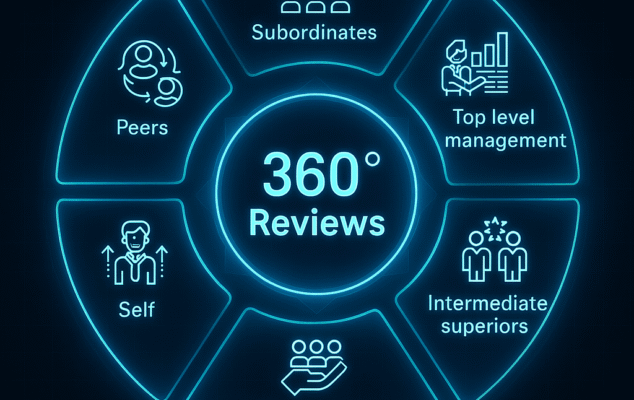
- 360° feedback from peers, managers, and self-reviews for balanced evaluation.
- Drag-and-drop review form builder for setting measurable criteria tied to each plan.
- People Goals overview for managers to see team-wide progress in real time.
This structure makes tracking improvement easier and more objective. Instead of chasing updates or losing notes, HR and managers can rely on real-time analytics to monitor who’s improving and who might still need coaching.
Thrivea turns manual reminders, check-ins, and spreadsheets into a smooth, automated workflow. That consistency helps HR teams run fairer, more transparent PIPs with documented progress at every step.
Bring structure and clarity to every PIP with Thrivea
A Performance Improvement Plan works when it’s clear, fair, and backed by structure. It helps employees fix problems, gives managers accountability, and keeps HR aligned around facts—not opinions.
The real value starts when you move past spreadsheets and guesswork. Thrivea brings together automated reviews, reminders, and goal tracking, so managers and employees can see progress in one place and act faster.
Want an easier way to manage PIPs and reviews? Book a demo and see how Thrivea keeps your team clear, consistent, and growing.





 12 min